
Quick Answer
Odoo can be hosted three ways: Online (fully managed SaaS), Odoo.sh (managed cloud with developer flexibility), or self-hosted on your own servers or VPS. Salesforce, by contrast, only runs as a fully managed SaaS platform through its Hyperforce infrastructure, with no self-hosting or on-premise option available. If your business needs infrastructure control or data sovereignty, its self-hosted option is the only one of the two that supports it.
Introduction
I’ve helped a few small teams work through this exact decision, and the confusion almost always starts with one wrong assumption: that Salesforce hosting works the same way Odoo hosting does. It doesn’t.
It gives you three completely different paths to run your CRM or ERP system. Salesforce gives you one. At nextsider.com, we get questions about this fairly often from teams comparing SaaS platforms before committing to a long-term contract, so this guide breaks down exactly how hosting works on both sides.
What Are the Odoo Hosting Options?
Odoo offers three distinct hosting models, and picking the wrong one is one of the most common mistakes I’ve seen teams make early on. Each option trades off cost, control, and technical overhead differently.
Odoo Online
This is Odoo’s fully managed SaaS option. it hosts everything, handles updates automatically, and you simply log in and use it.
It’s the closest thing to a Salesforce-style experience on the side. No custom Python code is allowed on this tier, which limits deep customization.
Odoo.sh
Odoo.sh is a managed cloud platform built for teams that want more flexibility without running their own servers. In my experience, this is the option most growing businesses land on.
- Supports custom modules and third-party apps
- Git-based deployments with staging environments
- Automated backups and built-in CI/CD
This gives you developer-level control while it still manages the underlying infrastructure.
Self-Hosted Odoo
Self-hosted means running it on your own VPS, dedicated server, or on-premise hardware. Your team owns the servers, the security patching, and the uptime.
This is the only it option that gives full data sovereignty, which matters a lot for regulated industries. It also tends to be the cheapest option at scale, though it requires real Linux and PostgreSQL administration skills on your team.
Does Salesforce Offer Self-Hosting?
No, Salesforce does not offer self-hosting or on-premise deployment under any plan. This is a hard architectural limit, not a pricing tier restriction.
Why Salesforce Sticks to a Single Hosting Model
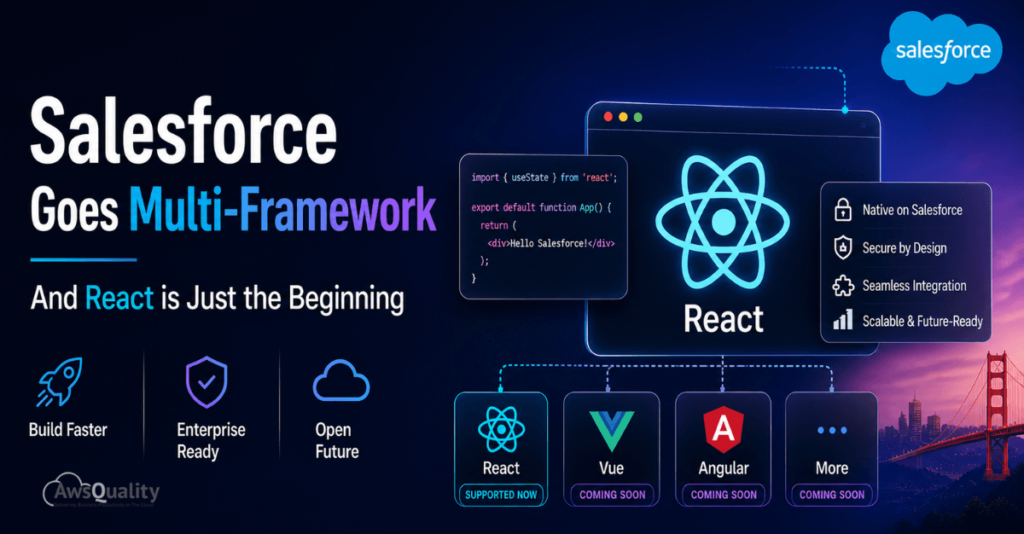
Salesforce runs entirely on its Hyperforce infrastructure, which is built across major cloud providers. This gives predictable uptime and automatic scaling without any server management on your end.
The trade-off is flexibility. You can’t move Salesforce to your own servers even if compliance or cost pressures push you in that direction.
What This Means for Data Residency
Salesforce does offer regional hosting through Hyperforce in select areas, but the exact guarantees depend on your contract and product tier. If your business has strict data sovereignty requirements, this is worth confirming directly with a Salesforce account rep before signing anything.
How Do You Choose Between Odoo and Salesforce Hosting?
The right choice comes down to how much infrastructure control your team actually needs versus how much they want to avoid managing altogether.
Quick Decision Checklist
- Choose Odoo Online if you want a hands-off setup similar to Salesforce
- Choose Odoo.sh if you need custom development without managing servers
- Choose self-hosted if data control or long-term cost savings matter most
- Choose Salesforce if you want a single, fully managed platform and don’t need self-hosting at all
Pro Tip: When I’ve run cost comparisons for clients, the number that usually surprises people isn’t the base license price. It’s how quickly Salesforce add-ons stack up once the sales team starts asking for features that sit behind paid upgrades.
Odoo vs Salesforce Hosting Comparison
| Factor | Odoo | Salesforce |
|---|---|---|
| Hosting options | Odoo Online, Odoo.sh, self-hosted | SaaS only (Hyperforce) |
| Self-hosting available | Yes | No |
| Custom code access | Yes, on Odoo.sh and self-hosted | Limited to Apex/platform rules |
| Data sovereignty control | Full control on self-hosted | Depends on contract and tier |
| Maintenance responsibility | Varies by hosting choice | Fully managed by Salesforce |
| Best for | Teams wanting flexibility or control | Teams wanting zero infrastructure overhead |
Frequently Asked Questions
Can Salesforce be self-hosted like Odoo?
No, Salesforce only operates as a managed SaaS platform. There’s no on-premise or self-hosted version available.
Which Odoo hosting option is closest to how Salesforce works?
Odoo Online is the closest match, since it fully manages the infrastructure and updates for you.
Is self-hosted Odoo cheaper than Salesforce long term?
It often is at scale, mainly because you avoid per-user SaaS fees, though you take on server and maintenance costs instead.
Does Odoo.sh require a developer on staff?
It helps a lot. Odoo.sh is built for teams that want to install custom modules and manage Git-based deployments.
Why doesn’t Salesforce offer an on-premise version?
Salesforce’s entire platform is built on its Hyperforce cloud architecture, which doesn’t support running outside that environment.
Is data more secure on self-hosted Odoo or Salesforce?
Both can be secure, but responsibility shifts. Salesforce handles security centrally, while self-hosted Odoo puts that responsibility on your own team.
Can I switch between Odoo hosting options later?
Yes, migrating between Online, Odoo.sh, and self-hosted is possible, though it typically requires planning around data migration and downtime.
Conclusion
The core difference comes down to this: Odoo gives you three hosting paths with real trade-offs, while Salesforce gives you one fully managed path with no exceptions. Neither is wrong, it just depends on how much control your team wants versus how much they’d rather hand off.
We put this comparison together on nextsider.com after seeing the same hosting confusion come up again and again in CRM evaluations. If infrastructure control matters to your business, that alone might settle the decision before pricing even enters the conversation.







Leave a Reply